
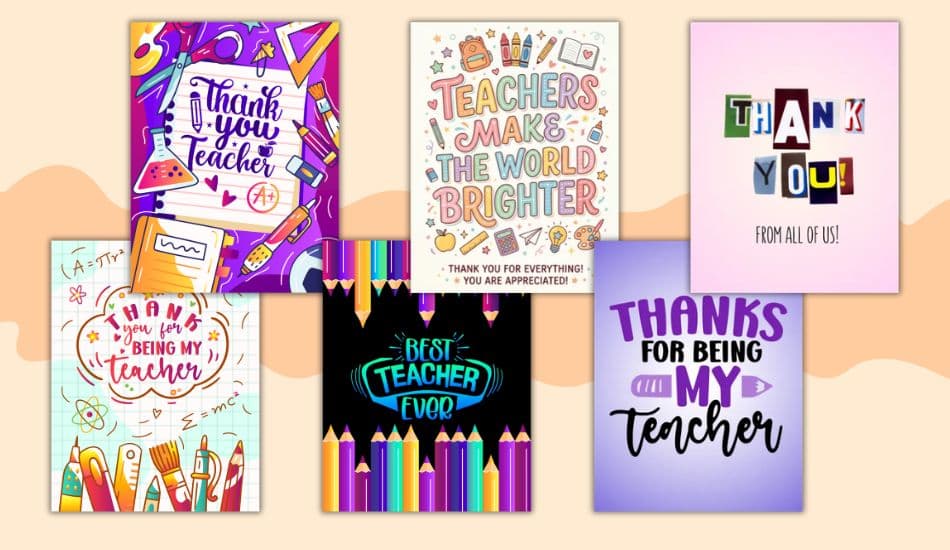
How to Make a Group Thank You Card for a Teacher from the Whole Class
A great teacher does so much more than teach lessons. They encourage children on hard days, celebrate progress, build confidence, and often become one of the most important people in a child’s school year. That is why a group thank you card from the whole class can mean so much. It is simple, heartfelt, and full of personality.
Whether you are a parent organiser, class rep, room parent, or teacher assistant, putting together a class thank you card does not have to be complicated. In fact, the best ones are often the most genuine. A few thoughtful words from each child can turn one card into a keepsake that a teacher remembers for years.
If you are looking for inspiration before you start, it helps to browse a few teacher appreciation thank you cards to get a feel for tone, design, and message style.
Why a Group Thank You Card Means So Much
A thank you card from one student is lovely, but a card from the whole class feels especially meaningful. It shows shared gratitude. It tells a teacher that their effort has been noticed by many families and children, not just one. It also captures different voices and memories in one place, which makes the card feel personal and real.
For teachers in both the US and the UK, the school year can be intense. There are lessons to plan, papers to review, behaviour to manage, and emotional support to give. At the end of term, during Teacher Appreciation Week, or before holidays, a group card is a warm reminder that their hard work mattered.
Start with the Right Format
Before collecting messages, decide what kind of card you want to create. A digital group card is often the easiest option because families can contribute from anywhere. It also works well when parents are busy or students are not all in the same room at the same time.
A printed card can also be beautiful, especially for younger children who want to add drawings, stickers, handprints, or short handwritten notes. If you have time, you can even combine both ideas by creating a digital card and printing it as a memory book or large poster style card.
If you want a quicker option that still feels thoughtful, explore group thank you cards for teachers and choose a design that suits the teacher’s personality. Some teachers love bright and cheerful styles, while others prefer something simple and elegant.
Gather Messages from Every Student
The heart of the card is the message from each child. That part should feel easy and low pressure. Not every student needs to write a long note. A single sentence can be enough if it is sincere.
You can ask families to submit one of the following:
A short thank you message
A favourite classroom memory
One thing the child learned that year
A few words that describe the teacher
A drawing or doodle from younger children
Try to give parents a clear deadline and a simple format. For example, you can ask them to send their child’s first name and a message of one to three sentences. Keeping it consistent makes the final card easier to assemble.
If some children are too young to write their own note, parents can help by writing exactly what the child says. That usually leads to the sweetest messages because they sound honest and natural.
Help Children Write from the Heart
Many children freeze when asked to write a thank you note because they worry about saying the right thing. A little guidance goes a long way. Instead of asking them to write something formal, encourage them to answer simple prompts like these:
What did your teacher help you do this year?
What is something fun you remember from class?
What do you like most about your teacher?
How did your teacher make you feel?
This makes the writing feel more personal and much less forced. A message like “Thank you for helping me with reading when I felt nervous” feels more meaningful than a copied line that could belong in any card.
If you need examples for inspiration, take a look at thank you cards for teacher appreciation and notice how the best messages sound warm, specific, and genuine.
Make the Card Feel Like a Class Project
A group card should feel like it belongs to the whole class, not just a list of names on a page. Once you have all the messages, think about how to arrange them in a way that feels lively and thoughtful.
You might group messages by first name, place them around a class photo, or create separate pages with a few students on each one. If it is a printed card, you can use different colours, childlike fonts, or scanned drawings to keep it playful. If it is digital, add small design touches that reflect the school year, such as books, pencils, apples, stars, or classroom themes.
Try to keep each child’s contribution visible. Teachers love being able to pause and read each message one by one. That is what turns the card from a nice gesture into something worth saving.
Add Personal Details That Matter
The most memorable thank you cards usually include a few personal touches beyond the written notes. These details do not need to be fancy. They just need to feel real.
A class photo can make a huge difference. So can a page of quick doodles, a list of funny class quotes, or a collection of things students loved most about the year. You might include answers to prompts such as “My favourite trip was…” or “I will always remember when…”
If the teacher is retiring, moving schools, or finishing a big milestone year, these details become even more valuable. They help capture a moment in time that cannot be repeated.
For more design inspiration, browse teacher thank you card ideas and choose a style that matches the emotion you want to share.
Keep the Tone Warm and Natural
One of the biggest mistakes people make is trying to sound too polished. A class thank you card should not read like a corporate letter. It should feel warm, kind, and slightly imperfect in the best possible way.
That means simple language is often best. Think about how children and families actually speak. Use real memories. Mention the small things. Those are often the lines a teacher remembers most.
For example, instead of writing “We appreciate your dedication to educational excellence,” try something like, “Thank you for making the classroom feel happy and safe every day.” It is more natural, more human, and much more moving.
Include a Message from the Parents or Class Rep
While the children’s messages should be the focus, it is also lovely to include one short note from the group of parents or from the class organiser. This can tie everything together and express gratitude on behalf of the adults who saw the teacher’s care throughout the year.
Keep that note short and sincere. A few lines is enough. Thank the teacher for their patience, encouragement, communication, and support. If appropriate, mention how much the class grew during the year, both academically and personally.
This adult note works especially well at the beginning or end of the card, while the student messages remain the centerpiece.
Choose the Right Moment to Give It
Timing matters more than people think. A thank you card feels most special when it is given at a meaningful moment. End of term is the classic choice, but it is not the only one. Teacher Appreciation Week in the US, the last day of school, Christmas, or after a big class performance or trip are all lovely times to present it.
If possible, let the teacher open it when there is a quiet moment to actually read it. Rushing through it at the classroom door is fine if needed, but a little pause makes the experience more memorable.
If you are organising a digital option, class thank you cards can also be shared easily with parents and students, making it simple for everyone to contribute on time.
Avoid These Common Mistakes
A beautiful class card does not need to be perfect, but it does help to avoid a few common issues. Do not wait until the last minute to collect messages because some families will need a reminder. Do not make the instructions too complicated, or people may put it off. Do not over-edit the children’s words so much that they lose their personality.
Also, do not worry if not every student can contribute a long message. A few words, a smiley face, or a quick drawing can still carry plenty of heart.
Final Thoughts
A group thank you card for a teacher from the whole class is one of the simplest ways to show genuine appreciation. It brings together the voices of students, families, and the wider class community in one thoughtful gesture. More importantly, it gives a hardworking teacher something personal to hold onto long after the school year ends.
The best class cards are not the fanciest ones. They are the ones filled with real words, small memories, and honest gratitude. If you keep it simple, organized, and heartfelt, you will create something a teacher truly treasures.
Tags
Ready to Create Your Own Digital Cards?
Join 25,000+ workplaces already creating beautiful group cards and digital invitations — free, fast, and collaborative.
Search
Recent Articles
How to Make a Group Thank You Card for a Teacher from the Whole Class
May 16, 2026

50+ Meaningful Thank You Messages for Teachers at Graduation
May 16, 2026

How to Organize a Group Graduation Card for Remote Teams & Large Families
May 13, 2026

2026 Graduation Etiquette: When to Send Cards, Announcements, and Gifts
May 11, 2026

What to Write in a Graduation Card: 50+ Messages for 2026
May 11, 2026